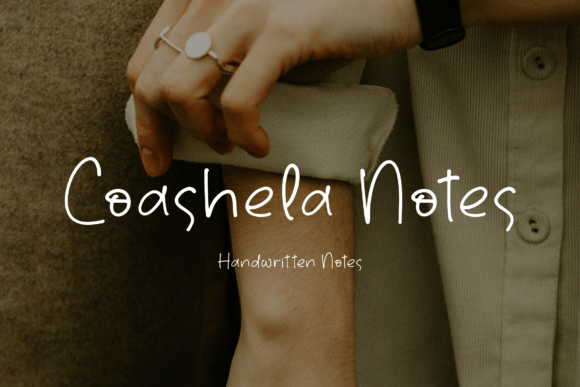
Coashela Notes: A Handwritten Font Review for Modern Brand Identity
The cursor blinks on a blank artboard. It is that familiar moment of creative paralysis where you are trying to build a brand identity from scratch, and every default sans-serif feels too corporate while every decorative script looks like a wedding invitation from 2012. I was working on a visual refresh for a small-batch skincare line when this happened. The client wanted something organic, personal, and tactile—something that felt like it was written by hand but still held up under the scrutiny of professional logo design.
I pulled up Coashela Notes, a handwritten font from the Script category, and placed it over a rough sketch of their logo concept. Immediately, the tension in my shoulders dropped. This wasn’t just another generic brush script; it had a specific rhythm and weight that anchored the design rather than floating above it. In this review, I will walk through how Coashela Notes performed across various design assets, from packaging mockups to social media graphics, offering an honest look at its strengths, limitations, and best practices for integration into your next project.
First Impressions: Personality and Visual Appeal
Coashela Notes presents itself as a casual, flowing handwritten typeface with a distinct personality. Unlike some scripts that feel overly calligraphic or stiff, this font captures the energy of quick, confident pen strokes. It has a modern typography vibe that bridges the gap between traditional handwriting and contemporary graphic design trends. When I first tested it, I noticed the natural variation in stroke width, which gives it a premium font feel without requiring complex vector manipulation.
The mood of Coashela Notes is approachable yet polished. It does not scream for attention; instead, it invites the viewer in. This makes it particularly effective for brands that want to convey authenticity, craftsmanship, or a personal touch. Whether you are designing for a boutique hotel, a handmade jewelry shop, or a creative studio, the font’s aesthetic aligns well with industries that value human connection over industrial precision. It feels less like a digital asset and more like a tangible element of the brand story.
Real-World Application: Logo Design and Branding
The true test of any script font is its viability in logo design. Many handwritten fonts fail here because they become illegible at small sizes or lack the structural integrity to work as a standalone mark. I applied Coashela Notes to a logo draft for a local café, using it for the establishment name while pairing it with a clean sans serif font for the tagline. The result was striking. The handwritten style added warmth and character, instantly differentiating the brand from competitors who relied on rigid geometric logos.
However, there are nuances to consider. While Coashela Notes works beautifully as a display font for headlines and primary branding elements, it requires careful spacing (kerning) to maintain readability. In my testing, I found that placing it on a business card or a shop sign required slightly larger point sizes to ensure clarity. For smaller applications, such as favicons or mobile app icons, the intricate details of the handwriting might get lost. Therefore, it is best utilized as a headline font or logo font rather than a supporting typeface for body text.
When building a complete brand identity, consistency is key. I used Coashela Notes across multiple touchpoints, including product labels, shopping bags, and t-shirts. On product packaging, the font’s organic lines complemented natural materials like kraft paper and matte finishes exceptionally well. It enhanced the perceived value of the product, suggesting that care and attention were put into both the design and the contents. For editorial design projects, such as magazine layouts or book covers, the font serves as an excellent accent font, drawing the eye to titles and pull quotes without overwhelming the reader.
Packaging, Merchandise, and Digital Assets
One of the standout features of Coashela Notes is its versatility across physical and digital mediums. I created a series of mockups for homeware designs, including mugs and posters, and the font translated seamlessly. The contrast between the handwritten style and the solid backgrounds of the merchandise made the text pop, ensuring high visibility and recognition. For e-commerce businesses, this level of visual appeal can significantly impact audience engagement, as customers often make purchasing decisions based on the perceived quality of the branding.
In the realm of web design, Coashela Notes proved to be a versatile tool for hero sections and call-to-action buttons. Its unique shape breaks the monotony of standard web typography, creating a memorable user experience. However, for long-form content, it is crucial to avoid using this font for body text. Readability drops significantly when viewers are forced to parse sentences written in a script style. Instead, pair Coashela Notes with a highly legible serif font or a neutral sans serif font to create a balanced typographic hierarchy. This combination allows the handwritten font to shine as a creative highlight while maintaining professionalism and ease of reading.
- Product Packaging: Excellent for labels and tags, adding a artisanal feel.
- Social Media Graphics: Ideal for Instagram posts and stories, where short phrases need to grab attention quickly.
- Merchandise: Works well on t-shirts, tote bags, and posters due to its bold visual presence.
- Web Headers: Perfect for homepage hero sections to establish brand personality immediately.
Technical Considerations and Pairing Advice
Before integrating Coashela Notes into your final client work, it is essential to review the included styles and file formats. Most premium font packages offer multiple weights, alternates, ligatures, and swashes that can add depth to your designs. If Coashela Notes includes these features, take the time to experiment with them. Alternates can provide variety in repeated letters, while ligatures can smooth out awkward connections between characters. Multilingual support is also a valuable feature if your brand operates in diverse markets, so check the character set to ensure it meets your needs.
Font pairing is critical when using a script like Coashela Notes. Because it is a creative font with strong visual characteristics, it pairs best with understated typefaces. A modern sans serif font provides a clean counterpoint, allowing the handwritten style to stand out without competition. Alternatively, pairing it with a classic serif font can evoke a sense of heritage and elegance, suitable for luxury brands or formal events. Avoid pairing it with other script fonts unless you are highly experienced in typography, as this can lead to visual clutter and confusion.
Testing is another vital step. Always preview Coashela Notes in black and white to assess its structure and balance. Check how it performs at different sizes, especially when printed on textured surfaces or displayed on low-resolution screens. If the font lacks sufficient contrast or detail, it may not hold up in all environments. Additionally, verify webfont availability if you plan to use the typeface on websites, ensuring that the rendering remains consistent across browsers.
Limitations and Best Practices
No font is perfect, and Coashela Notes has its limitations. It is not suitable for formal corporate use, legal documents, or any context requiring strict neutrality. The casual nature of the handwriting can undermine authority in these settings. Furthermore, for projects involving extensive body copy, such as books or technical manuals, this font would hinder readability and fatigue the reader. It is strictly a display and decorative font, meant to be used sparingly for maximum impact.
Another important consideration is commercial licensing. Before using Coashela Notes in any client work, brand identity systems, packaging templates, or print-on-demand products, always review the license agreement. Some fonts allow unlimited commercial use, while others restrict usage to a certain number of impressions or require additional fees for merchandising. Ensuring compliance protects your business from legal issues and respects the designer’s intellectual property.
In conclusion, Coashela Notes is a compelling addition to any designer’s toolkit. Its blend of artistic flair and professional polish makes it ideal for branding projects that aim to connect with audiences on a personal level. By understanding its strengths and respecting its limitations, you can leverage this handwritten font to create distinctive, memorable designs that stand out in a crowded market. Whether you are crafting a logo, designing packaging, or updating your social media presence, Coashela Notes offers a reliable and stylish solution for bringing your creative vision to life.